
A collaborative performance blending martial arts, art, video, and music.
Kagura, Chinese martial arts, Taido, traditional Chinese instruments, a Japanese traditional instrument ensemble, and video come together to weave an overwhelming story of life in “New Spatio-Temporal Experience.”
This stage performance, originating in Shizuoka, was born from a concept unlike anything seen before.
Unknown Realms Within Vol.2
Date / Sun, December 20, 2026
■ Morning / 10:00 - 11:30 (Doors open at 9:30)
■ Afternoon / 13:00 - 14:30 (Doors open at 12:30)
■ Evening / 16:00 - 17:30 (Doors open at 15:30)
Venue / Grandship Main Hall - Ocean
*Please click here for directions to the venue.
Organized by / K.GE REEDS JAPAN Co., Ltd.
Show starts at 10:00
◯ Kiyosawa Kagura : “Dance of the Pine, Bamboo, and Plum”
◯ Shigin (Poetry Recitation) Performed by : Kenshi Maeda
◯ Chinese Martial Arts
- Simplified 24-Form Tai Chi Chuan · Group Freestyle Routine
- Parent-Child Changquan
- Mantis Fist / Sword Techniques · Changquan
- Traditional Chen-style Tai Chi Chuan
- Martial Arts Tai Chi Chuan
- Pair Fan Performance
◯ Traditional Japanese Instrument Performance Performed by : AKATSUKI
◯ Taido Performed by : Shizuoka Western Region Taido Association, Tetsuji Nakano, and others
*Please note that the program is subject to change. We appreciate your understanding.
Profiles of the Main Cast (Selected Cast Members / In Program Order)

Members of the Kiyosawa Kagura Preservation Society (approximately 10 people), designated as an Intangible Folk Cultural Property of Shizuoka Prefecture
The Kagura traditions passed down throughout a wide area of central Shizuoka Prefecture can be divided into the “Abe-Ikawa style” and the “Warashina-Kawane style,” with differences in the arrangement of the five directions and the musical accompaniment. The Kiyosawa Kagura of Aoi Ward, Shizuoka City, belongs to the Warashina-Kawane style and is what is known as “Yutate Kagura.” Kagura performances take place on a stage set up in the worship hall of a shrine or in the formal living room of a private home. A sacred space is established by constructing a 2-ken-by-4-ken (approximately 3.6m x 7.2m) frame from bamboo or similar materials suspended from the ceiling. Nine shimenawa ropes are strung vertically and horizontally across this frame, and five-colored (blue, red, yellow, white, and black) dolls called “Hina” are displayed at the four corners and in the center. Additionally, a wooden square frame called “Mikasa-yama,” colored in the five hues, is suspended in the center. Other decorations include five-colored shimenawa ropes, as well as “horinuki”—paper cutouts depicting torii gates, sea bream, layered rice cakes, and characters representing the gods of heaven and earth and the eight million deities. This entire setup is collectively referred to as “Kagura-dojo.” The “Sanpo no Mai” (Dance of the Three Treasures) within the Kagura dance was performed as a “wish-fulfillment” dance until around the 1940s, but today, since there are no longer people making or praying for wishes, it is no longer performed as a wish-fulfillment dance.

Kenshi Maeda / Recitation and Shakuhachi Performance
(Fujinomiya City World Heritage Cultural Exchange Goodwill Ambassador)
Master Instructor of the Gakushin-ryu School of Poetry Recitation and Master Instructor of the Kinko-ryu Shakuhachi Takuyusha School. He began studying poetry recitation at the age of three, placed in the top ranks at a national competition at age eight, and became a member of the Nippon Columbia Poetry Recitation Society. He began playing the shakuhachi at age 9 and has appeared on programs such as NHK’s “Nippon no Geinou.” He has performed alongside artists including Yumi Katsura, Ryotaro Sugi, Shigeru Matsuzaki, Natsuko Godai, Shogo Kariyazaki, and Koichi Sato. In addition to his solo work, he expresses the deep tones and techniques of the shakuhachi and shigin, as well as the interplay of sounds with Western instruments, through performances with groups such as “Akatsuki.” He serves as a Fujinomiya City World Heritage Cultural Exchange Goodwill Ambassador, a Special Supporter for the Ministry of Health, Labour and Welfare’s “Know Hepatitis/Health First Project,” and a Special Crime Prevention Officer for the National Police Agency. He is currently active both domestically and internationally, performing in countries such as Saudi Arabia, the United States, Nepal, and Taiwan.
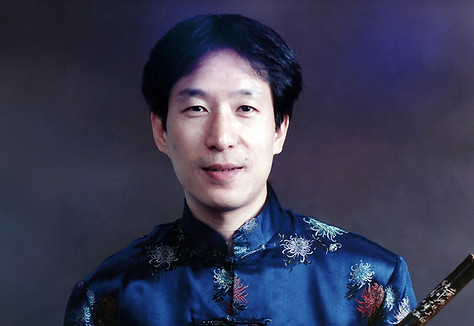
Wang Mingjun / Performance of Traditional Chinese Instruments
(Visiting Professor at Showa University of Music)
In 1983, upon graduating from the Central Conservatory of Music, he was appointed as the youngest lecturer in the Department of Folk Music at the same institution. From 1979 to 1984, he performed as a representative of China in Europe, the Middle East, and various Asian countries. In 1985, he came to Japan and gave numerous recitals at venues such as the Tokyo Bunka Kaikan, Aoyama Round Theatre, and Tokyo Metropolitan Theatre, as well as in Hiroshima, Okayama, Osaka, and other locations. In 1991, he completed his master's degree at the Tokyo University of the Arts Graduate School. Also, in October 1999, he performed with the Shinsei Nippon Symphony Orchestra in the presence of the Crown Prince and Crown Princess at a concert sponsored by the Agency for Cultural Affairs. In January 2003, he received the Min-On Art Award from the Min-On (Democratic Concert Association) for his self-composed piece "Starlight." In July 2007, he was invited to the Beijing Contemporary Music Festival and performed a Dizi Concerto with the China National Symphony Orchestra. In the spring of 2008, she performed a solo on the dizi and dongxiao for the theme song of a Korean drama (composed by Joe Hisaishi). To date, she has released CDs such as "Gusu Xing," "MUDI," "Kuchigenka," and "Daichi no Oto." In addition to performing traditional Chinese classical music, she actively engages in the performance of contemporary works, and sometimes performs with jazz musicians, demonstrating a wide range of activities.

Zhou Peifang / Chinese Martial Arts: Tai Chi (*Includes Kids Kung Fu)
(Advisor to the Zhou Tai Chi Research Society)
Others : Approximately 20 members of the Chou Tai Chi Research Group
●Zhou Tai Chi Research Association
https://zhou-taiji.jimdosite.com/
●Shizuoka City Junior Martial Arts and Tai Chi
https://www5b.biglobe.ne.jp/~chi1i3r7/page007.html
●Hamamatsu Junior Kung Fu Club
Born in Shanghai. Former lecturer at the Wushu College of Beijing Sport University. From a young age, he trained under his father, Zhou Yuanlong—a leading figure in the Chinese martial arts world—learning the authentic, direct-line techniques of Taijiquan and inheriting the full transmission of its profound secrets. While attending university, he won the Yang-style championship at the National Chinese Wushu Competition and the Chen-style championship at the North China Six Provinces Wushu Competition. In 1995, he earned a master’s degree from the Graduate School of Education at Shizuoka University. That same year, he became a part-time lecturer at Shizuoka University, a position he holds to this day. Based in Shizuoka City, he is active as a martial arts and Tai Chi instructor throughout Japan. In addition to his books, such as *Introduction to Tai Chi*, *Chen-style Tai Chi Sword*, *Refreshing Fitness Method*, and *Yang-style Tai Chi Body Application*, he has authored numerous academic papers, including “A Study on the Techniques of Chinese Tai Chi as Seen in History,” “A Study on the Nature of Tai Chi in Japan,” and “A Historical Examination of ‘Shi’ in Chinese Martial Arts.”

Kazuko Hashimoto / Chinese Martial Arts: Tai Chi
(Director of the Yuanlong Tai Chi Exchange Association)
Others : Approximately 10 former members of the Yuanlong Tai Chi Exchange Association
He was introduced to Tai Chi in 1980. In 1986, he began studying under Master Zhou Yuanlong, who was living in Shanghai, and in 1991, he won third place in the Chen-style category at the 3rd Japan-China Tai Chi Exchange Competition. In 1994, he became a formal disciple, and following Master Zhou’s passing in 1997, he founded the Yuanlong Tai Chi Exchange Association with five colleagues, a position he holds to this day. He has served as the association’s representative since 2009. He has won numerous gold medals at events such as the World Traditional Martial Arts Festival, the Zhengzhou International Shaolin Martial Arts Festival in China, and the Shanghai International Martial Arts Expo. He is dedicated to sharing the knowledge and skills he has acquired to promote the physical and mental well-being of people of all ages.
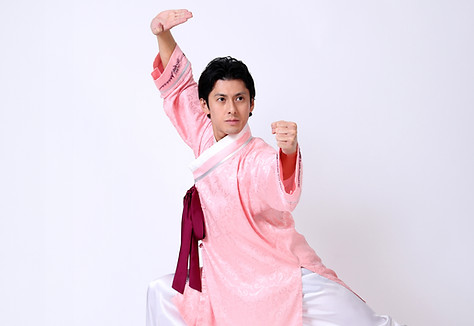
Daisuke Ichikizaki / Chinese Martial Arts: Tai Chi
(Current Development Coach for the Japanese Olympic Committee)
●YouTube
https://www.youtube.com/@ichikizakiwushuchannel9172
●Ichikizaki Martial Arts and Tai Chi Club
He began practicing martial arts at the age of 6, became a member of the junior national team at 14, and won the All-Japan Championship at 17, earning a spot on the senior national team. Aiming to improve his competitive skills, he enrolled at Osaka University of Health and Sport Sciences. Despite being an amateur in a field dominated by professionals, he won numerous medals at international competitions. He is the undisputed ace of the Japanese martial arts and Taijiquan community, leading the Japanese national team as its captain. Although he holds a teaching license and had originally aspired to become a physical education teacher, he decided to pursue martial arts instead, driven by the desire to “challenge my own limits and I want to spread the wonders of martial arts even further," he began teaching martial arts across the country. Alongside this, he actively performs demonstrations at schools and events and organizes his own martial arts events. His specialty, Changquan, is dynamic and spectacular, and his captivating performances are highly acclaimed worldwide. He retired from competitive competition in 2016 and currently serves as a development coach for the Olympic Committee, dedicating himself to teaching and promoting martial arts.

Naoko Ichikizaki / Chinese Martial Arts: Tai Chi
(Former member of the Japanese national team; current coach for the National Sports Festival at the Kanagawa Prefecture Wushu and Taijiquan Federation (NPO))
●Blog
https://www.ameba.jp/profile/general/nanakonbu-52/
●Ichikizaki Martial Arts and Tai Chi Club
Member of the Japan Taijiquan Association. Began practicing karate at age 9 and taijiquan at age 11. After a successful career as a junior athlete—including winning first place in the All-Around Taijiquan category at the Junior Olympic Cup—he became a member of the Japanese national team in 2005. He has won the All-Japan Championships five times. Utilizing his tall stature and long limbs to perform beautiful and elegant taijiquan, he has excelled on the world stage, including winning medals at two consecutive World Championships. Retired in 2015. Currently, she is dedicated to promoting Tai Chi through teaching at her own studio, performing demonstrations nationwide, and serving as an instructor for the “Tai Chi Gathering” held at the Mazu Temple in Yokohama’s Chinatown. Member of the Japan Tai Chi Friendship Association. Awards: Recipient of the Ministry of Education, Culture, Sports, Science and Technology Award for Excellence in International Competitions.

AKATSUKI / Traditional Japanese Instrument Ensemble (approx. 4 members)
Kenshi Maeda (Shakuhachi), Taiki Tajiri (Trumpet), Yasutaka Yamashita (Tsugaru Shamisen), Takuya Tsubaki (Japanese Drums)
A Japanese instrumental band comprising three members: Taiki Tajiri on trumpet, Kenshi Maeda on shakuhachi, and Takuma Akabane on Japanese drums. Formed at the initiative of Taiki Tajiri, the group is driven by the aspirations to “connect the world through music,” “introduce traditional performing arts to the world in a new form,” and “express the Japanese spirit through sound.” They were named “AKATSUKI” with the hope of becoming a ray of sunlight illuminating the world from the Far East of Asia. Focusing on original compositions, their oriental melodies transcend the boundaries between Japanese and Western music, spanning a wide range of genres from acoustic to EDM fusions. Their sound is anticipated to be unlike anything heard before. For their costumes, they are committed to using domestically produced materials, performing while clad in Enshu cotton twill designed by Takuya Ushio.

Tetsuji Nakano / Taido
(Director of Kirenkan Wins Fourth Consecutive World Championship Title in Individual Kata)
Others : 28 members of the Shizuoka Western District Taido Association; supervised by Akihiko Kato (8th Dan Hanshi)
A Taido athlete from Ehime Prefecture. Director of the Kirenkan Dojo. Gold medalist in the individual kata event at the 2005 Gothenburg World Championships, the 2009 Hiroshima World Championships, and the 2013 Helsinki World Championships. Graduate of Takushoku University. He began to stand out during his college years, excelling at the National Student Taido Championships. After graduation, he established the Kirenkan in Funabashi City, Chiba Prefecture. He founded Kirenkan in January 2003 and won both the individual kata and individual sparring titles at the All-Japan Taido Championships that same year. He competed in his first World Championships in 2005, winning a gold medal in the individual kata event. At the 2017 World Championships, he achieved his fourth consecutive victory in the individual kata competition. His passion and dedication to Taido have influenced countless young people and contributed to the sport’s widespread popularity.

Shinichiro Koike / Stage and Music Supervision
(Representative of Studio Omega)
●HP
Raised surrounded by music from a young age, he possesses pure musical DNA that, as far as he knows, has been passed down from one person per generation for four generations. After playing in bands, he immersed himself in avant-garde music using samplers and synthesizers, as well as computer music production, and naturally moved into the world of club music. While working as a DJ, he also organized events, honing his skills in music production and editing. In 2008, he launched the psychedelic project “Dead&Growing,” receiving invitations to perform live across the country and thrilling crowds with monthly shows at ageHa in Shinkiba. By actively participating in the production process at each venue he was invited to, he absorbed a wide range of creative approaches and ideas for spatial design, refining them into his own unique sensibility. He also defeated strong competitors to win the contest at the “Tokyo Nagisa Music Festival,” one of Japan’s largest outdoor events, and has provided tracks to multiple labels, including those overseas. Then, in September 2011, he established “Studio OMEGA.” Building on the techniques he learned from top-tier engineers active both in Japan and abroad, and relying on his innate sensitivity to sound and his extensive experience listening to authentic sounds, he continues to grapple with the open-ended question: “What is truly good sound?”
Tickets are scheduled to go on sale on the following website starting Tuesday, September 15.
For participants from overseas
Organizer / K.GE REEDS JAPAN Co., Ltd.
TEL.0557-80-3566
1125-37 Izusan, Atami City, Shizuoka Prefecture 413-0002
Reception Hours / Weekdays 9:00 AM–5:00 PM
2011
Unknown Realms Within Vol.1
Flyer


Digest video


